Summer Garden
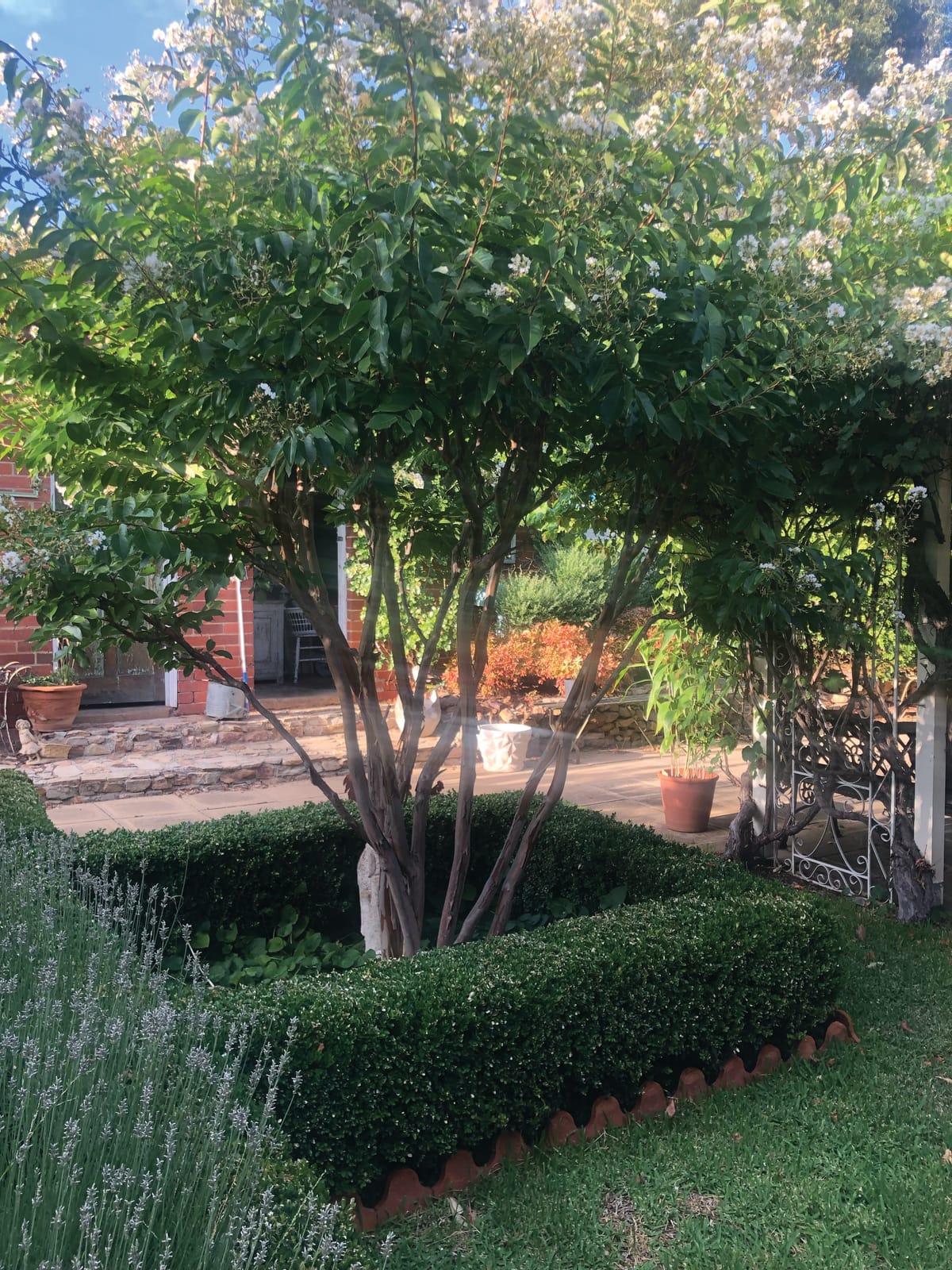
I don’t need to tell you how hot and dry it has been and unfortunately our gardens do suffer during these past conditions. For the last few years I have been slowly replacing and replanting some of my garden beds with plants that are more resilient to these conditions and bounce back once the weather cools down. As much as I love the cottage style garden, a lot of the traditional plants just don’t cope too well. So I have been more selective choosing from indigenous Australian natives grasses, succulents and Mediterranean plants which ones established have been coping very well. However it’s still very important to plant at the right time and soil preparation and mulching play a vital role to success.
Another way of helping your garden through our hot summers is providing shade by planting trees in selected places to help protect and keep areas of the garden cooler. Luckily for me, we inherited a garden with some wonderful native shade trees. I couldn’t imagine how much warmer our front garden veranda would be without the wonderful shade of our ornamental pear. Is not only creates a shaded haven for other plants but it has created a microclimate resulting in lower temperatures around the garden and house.
So careful selection and placement of trees can certainly make a big difference and there’s plenty to choose from whether they’re native or exotic, evergreen or deciduous.
Some good examples are dwarf flowering gums, bottlebrush, crepe myrtles, citrus and weeping trees such as ornamental cherries, mulberries and grafted weeping grevilleas. All will help to provide shade to plants or structures around them and help to keep ground temperatures cooler. There is of course a wide range of larger trees, but selection will depend on your space or size of your property.
Another thing to remember is that a healthy garden which is fertilized on a regular basis will be able to tolerate stressful conditions and bounce back a lot quicker. As far as fertilizers go there’s a vast range to choose from. I prefer one that is organic, preferably with a wetting agent. A combination of granular and liquid I find to work very well. Some liquid agents come ready to use, click on to your hose, so you can feed while watering. You can also buy the concentrate and dilute and reuse the sprayer over and over again, which makes it very economical. The size of your garden will determine which method suits you best.
I hope some of this helps and hopefully the weather is a bit kinder over the next few weeks.All the best and happy gardening.
RY